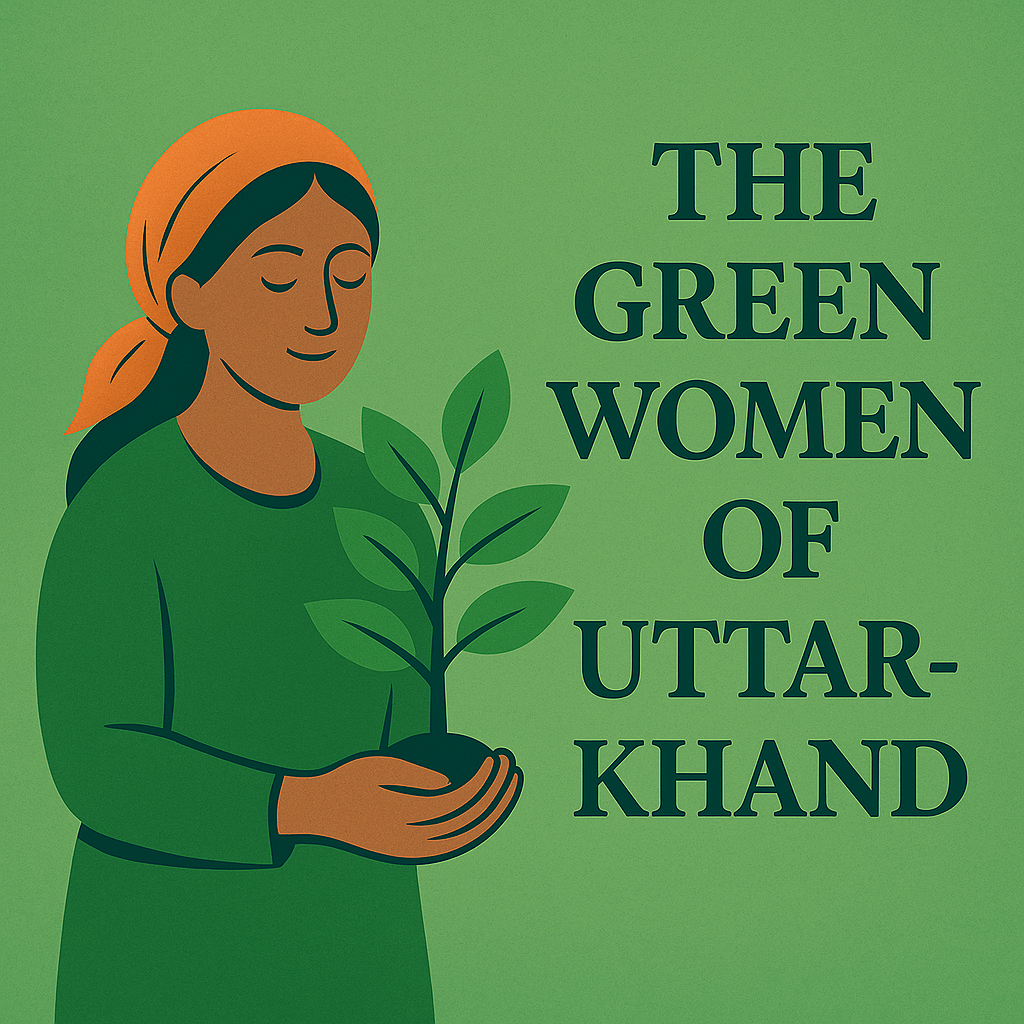
There’s a quiet revolution taking place in the hills of Uttarakhand—and it’s led by women with calloused hands and rooted hearts. They are seed keepers, water warriors, tree huggers—literally. They are the green women of Uttarakhand. And they’ve been protecting these mountains long before climate activism had hashtags.
Remembering the Chipko Women
In the 1970s, when loggers arrived to fell trees in the forests of Chamoli, it was the village women who stood between axes and trees. They hugged the trunks and refused to move. This was the birth of the Chipko Movement—a non-violent protest that not only saved forests but also redefined environmental resistance.
But those women didn’t see themselves as activists. They were mothers, farmers, caretakers. The forest was their grocery store, pharmacy, and temple. Losing it meant losing everything.
Women as Keepers of Sustainability
Even today, rural women in Uttarakhand play a central role in ecological balance. They grow native millets, manage forest commons, conserve traditional water sources (naulas), and teach ecological values to their children—not in classrooms, but through life itself.
I’ve met women in villages near Almora who collect plastic from mountain trails on their way to the fields. In Munsyari, women’s collectives run seed libraries, ensuring climate-resilient crops survive. In Tehri, they practice rainwater harvesting in homes built on slopes.
Why Women Must Lead Climate Action
Women are not just vulnerable to climate change—they are powerful agents of change. When floods disrupt water access, it is women who walk longer. When forests disappear, it is women who suffer fuel scarcity. But when solutions are needed, it is women who innovate first.
Unfortunately, they’re rarely given seats at decision-making tables. Development policies in hill states still prioritize roads and tourism over food security and ecological health. Yet the women continue—quietly, consistently, resiliently.
Lessons from the Hills
As someone who has walked alongside these women, I’ve learned more than I ever did in workshops or textbooks. They’ve taught me that conservation is not about doing more—it’s about doing less, with care. It’s about patience, observation, and interdependence. It’s about courage without noise.
The green women of Uttarakhand don’t want applause. But they deserve acknowledgement, support, and amplification. Their voices are rooted in soil and time—and they are the very foundation of sustainable futures.
Suggested Read: Conservation Is Not a Choice—It’s a Legacy














No responses yet