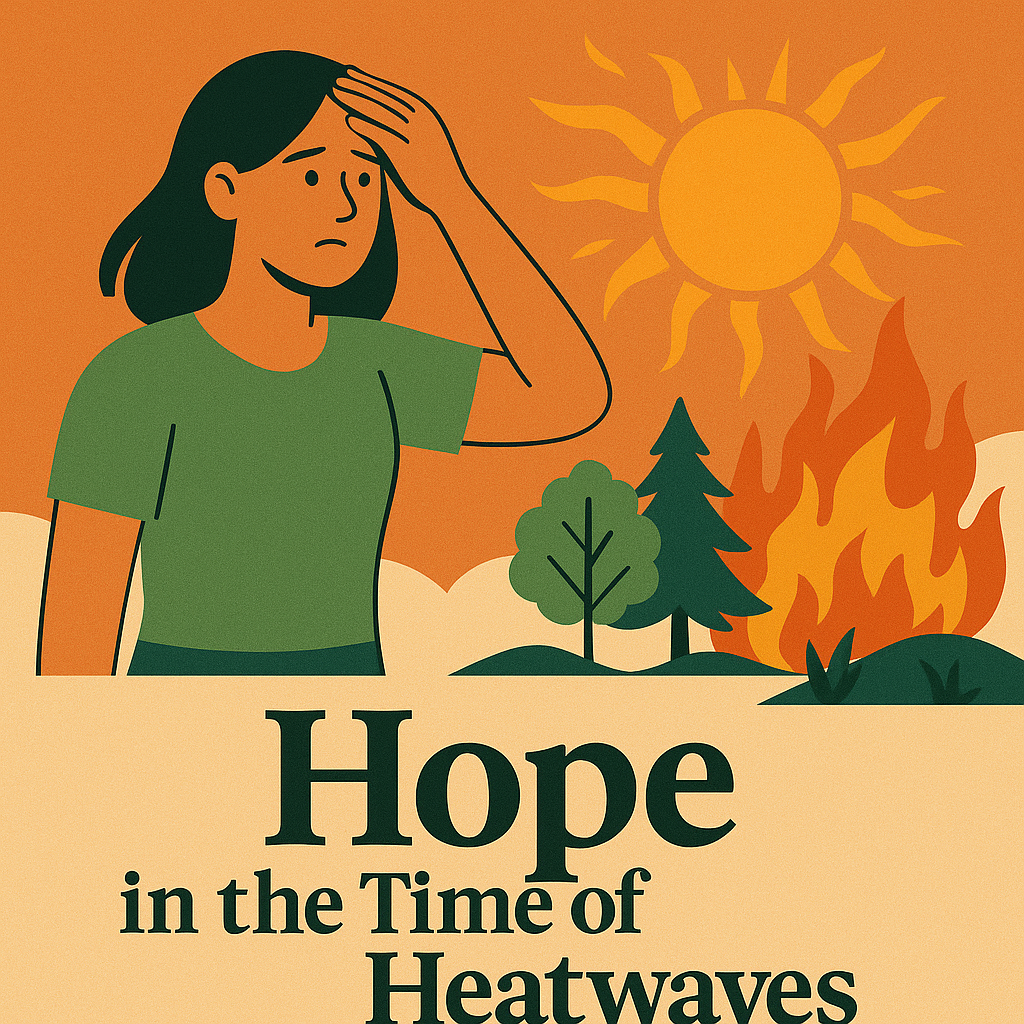
This May, Dehradun touched 44°C—the highest I’ve felt in my lifetime. The air felt like fire. Even the peepal trees drooped. My daughter asked, “Will the forest catch fire too?” And I had no easy answer.
Heatwaves, once rare and localised, are now regular across India—from Delhi to Dharwad. The climate emergency is no longer “coming.” It’s here. But even in this furnace, I find hope. Because hope, like seeds, germinates in harsh conditions.
Why Heatwaves Are Getting Worse
Global warming has raised baseline temperatures, making extreme heat more frequent and intense. Urban areas suffer worse due to the “heat island effect”—concrete, asphalt, and glass trap heat like a giant oven.
Climate models warn that without aggressive emissions reduction, South Asia could face 90–120 dangerous heatwave days per year by 2050. That’s not just uncomfortable—it’s life-threatening.
Where Hope Grows
1. Nature-Based Cooling
Green corridors, urban forests, and rooftop gardens drastically reduce local temperatures. A study in Delhi showed that shaded areas under neem trees were 5°C cooler than unshaded spots just meters away.
2. Traditional Architecture
Thick mud walls, jharokhas, inner courtyards, and lime plaster offer insulation that modern ACs can’t match. Villages in the Thar desert stay cooler than nearby towns for a reason. We must bring back that wisdom.
3. Women-Led Water Stewardship
In Tehri, I visited a village where women manage naulas (traditional springs), ensuring summer water access. In Gujarat’s Kutch, matriarchs lead ‘kuva’ restoration. These hyper-local solutions are quietly revolutionary.
4. Community Action Plans
Ahmedabad pioneered India’s first heat action plan, including early warnings, water distribution, and awareness drives. Now more cities are following suit—with NGO and government collaboration. This is what resilience looks like.
What You Can Do
- Support tree plantations—not just numbers, but survivability.
- Use fans more, coolers less. Reduce peak energy stress.
- Plant shade-giving native species around your home or school.
- Share verified heat health tips in your community groups.
Hope, in the climate era, is not naive optimism. It’s informed, grounded, and rooted in action. It’s small shifts repeated often, with compassion. And above all, it’s collective.
The Future Isn’t Written
We still have time. Not forever—but enough. Enough to cool cities with green canopies. Enough to bring back sacred springs. Enough to teach our children not just how the planet heats, but how it heals.
On that 44°C day, I didn’t lie to my daughter. I told her yes—the forest could burn. But if we protect it, it could also bloom. That’s what I believe. That’s what keeps me writing.
Suggested Read: Climate Change Is Already Here—Just Ask the Himalayas














No responses yet