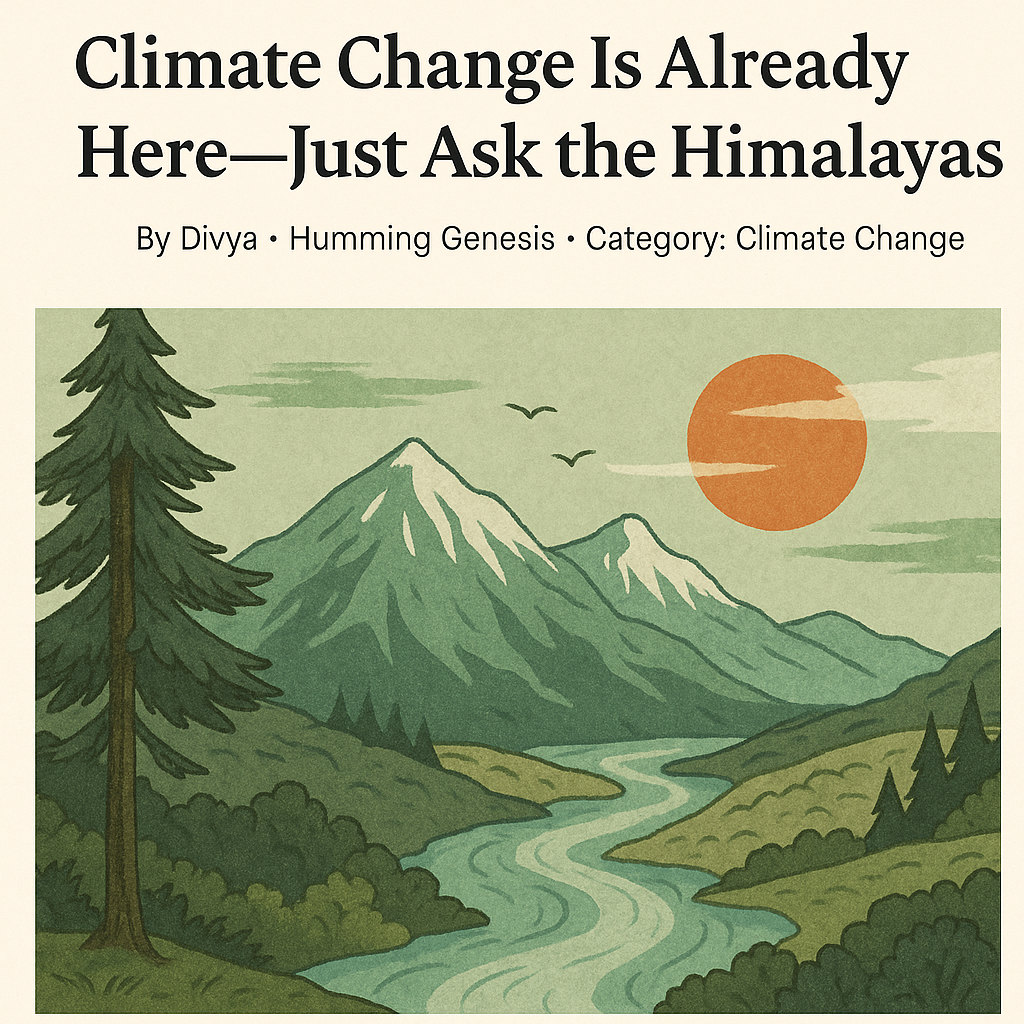
When people talk about climate change, they often speak of the future. But in the Himalayas, the future has already arrived. The signs are subtle but certain—streams that run dry in summer, erratic snowfall, melting glaciers, and a silence where once birds nested.
In the Garhwal region of Uttarakhand, where I’ve spent much of my life, climate change is not an abstract threat. It’s the slow disappearance of seasonal patterns that once defined our lives. Mangoes bloom too early. Rain comes in furious bursts or not at all. Monsoon used to arrive like a promise. Now, it feels like a warning.
Glaciers on the Run
According to studies by the World Resources Institute India, Himalayan glaciers are receding at alarming rates. This isn’t just bad news for the mountains—it’s catastrophic for the plains. These glaciers feed rivers like the Ganga, Yamuna, and Brahmaputra. As they shrink, water availability for millions downstream becomes uncertain.
In villages near Gangotri, elders speak of how glacier tongues used to be visible from foot trails. Today, one must trek hours longer to glimpse them. The sacred and the scientific are in quiet mourning together.
Changing Lives, One Season at a Time
Climate change in the Himalayas also affects livelihoods. Apple orchards are shifting uphill. Traditional crops like buckwheat and rajma are being replaced by hybrids that survive heat. And with more frequent landslides, even access to schools, healthcare, and markets is disrupted.
The worst part? Those who contributed least to this crisis—the mountain communities—are suffering the most. Women walk further to fetch water. Livestock fall sick more often. And entire generations are growing up without the seasonal rhythm their ancestors relied on.
What Can We Do?
While global policy must lead the charge, our local actions matter. Climate literacy in schools, water harvesting systems in mountain homes, and policies that protect traditional crops are just a start. Support must flow to community-based initiatives—like those of the Navdanya network—that preserve biodiversity and empower local farmers.
As a writer and environmentalist, I don’t have all the solutions. But I do know this: ignoring the Himalayas in the climate conversation is ignoring the source of life for a continent.
Climate change is not coming—it is already here. And in these mountains, its story is being written in water, stone, and silence.
Suggested Read: Hope in the Time of Heatwaves














No responses yet