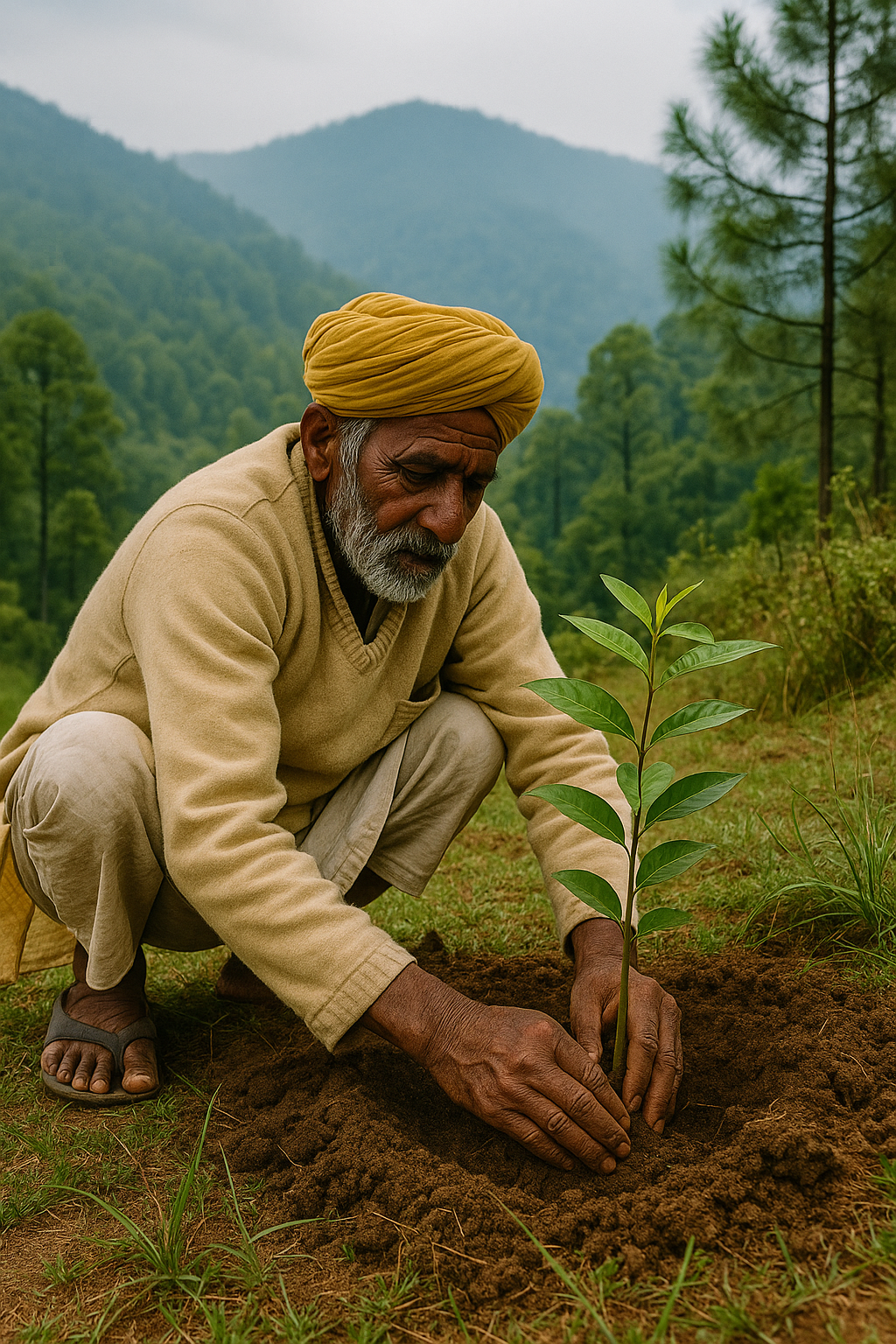
As a child, I remember my parents setting aside food every morning for birds and squirrels. It wasn’t an act of charity—it was a practice, passed down from generations. This wasn’t called “conservation.” It was simply a way of life.
Today, we speak of conservation as if it’s a novel invention. A well-meaning movement. Something we do through social media campaigns or corporate responsibility reports. But for communities across India—from the Van Gujjars of the Terai to the Apatanis of Arunachal—conservation has always been about relationship, not regulation.
In Uttarakhand, people have lived with the forest, not around it. They’ve taken only what they need, with seasonal wisdom guiding their choices. Trees weren’t cut during nesting seasons. Firewood was collected only after monsoon to ensure dry matter. Rituals often coincided with planting or harvesting, reinforcing a cyclical connection between humans and the land.
When Policy Ignores Practice
Unfortunately, modern conservation policy often views people as threats to the environment. National parks and reserves are demarcated with fences, and those who once cared for these forests are relocated. Near Rajaji National Park, I’ve met families whose entire existence has been upended in the name of “protection.” They are made to feel alien in the very ecosystems they once nurtured.
But there is another way. Community-led conservation projects—from the Chipko Movement to present-day seed banks run by Himalayan women—show that when people are given agency, nature flourishes.
Conservation Through Trust
True conservation means trusting the communities who already know how to live with the wild. It means listening to the forest elders and the folk songs that encode ecological knowledge. It means asking: “Who has protected this land for generations—and how can we support them to continue doing so?”
Let’s stop treating conservation as a policy initiative alone. Let’s begin honoring it as a legacy. One we didn’t start—but one we must fight to protect.
Suggested Read: The Green Women of Uttarakhand














No responses yet