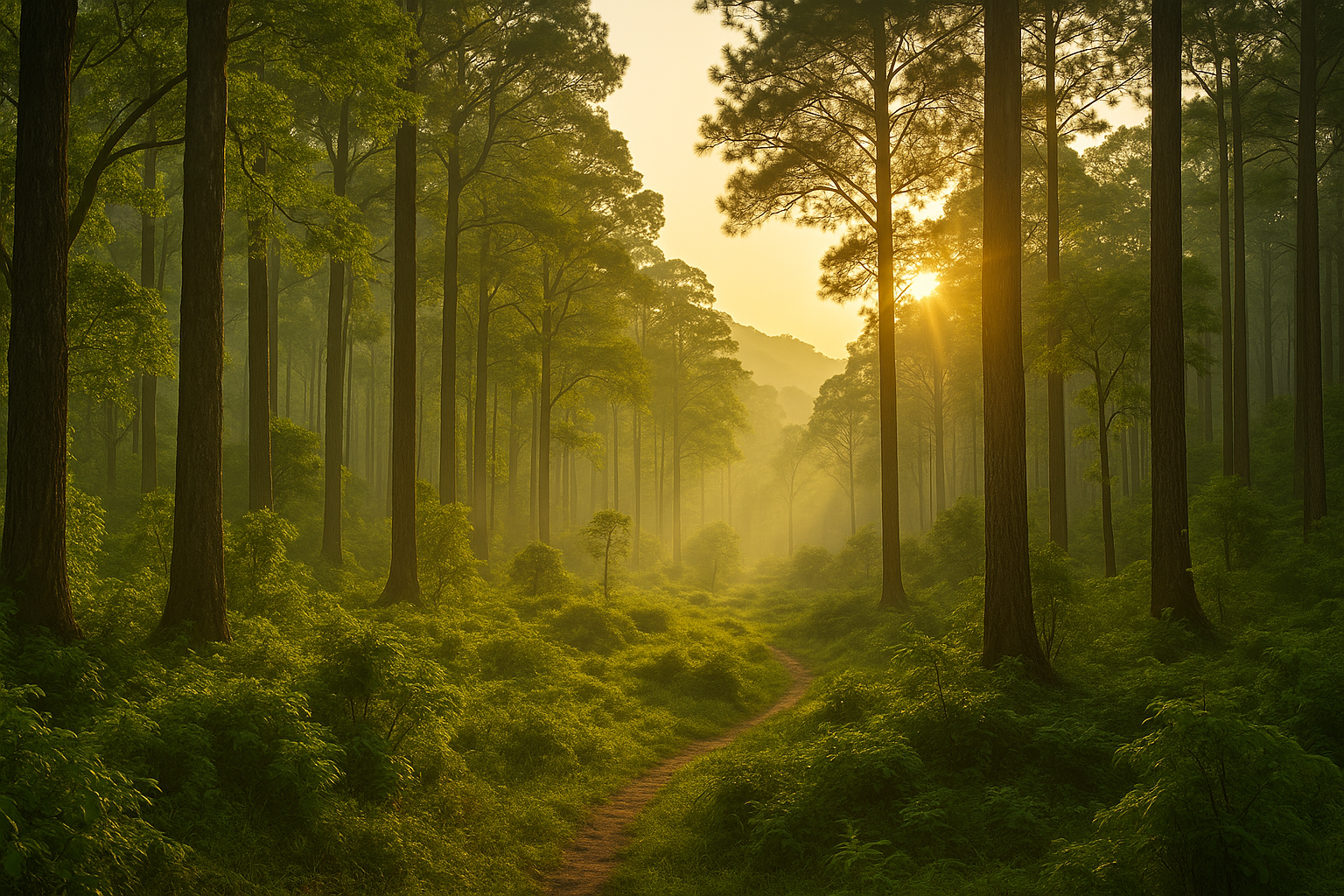
In the quiet mornings of Dehradun, I often walk through patches of Sal forest near my home. These aren’t the manicured botanical gardens we post on postcards. They’re tangled, breathing corridors—home to bark, birdcall, and breath. And in every trunk, I see a guardian we’ve learned to overlook.
When we talk about forests today, the dominant narrative is driven by data: carbon sequestration numbers, afforestation targets, biodiversity metrics. While these are essential, they tend to reduce forests to utilitarian roles. Forests become “resources” or “climate assets.” But a forest is not a spreadsheet. It is a living world—a complex system of relationships woven together by time and adaptation.
In Uttarakhand, forests are more than just green spaces. They’re sacred groves, local pharmacies, and ancestral classrooms. I’ve met women who still gather seasonal herbs, never taking more than needed. I’ve spoken with elders who remember the songs of birds that no longer return. These aren’t anecdotes—they’re disappearing archives of ecological memory.
And yet, the threats are mounting. Fragmentation from roads, unregulated tourism, monoculture plantations—all slowly chip away at the web of life that holds our forests together. Each development project that slices through a corridor cuts more than land—it disrupts migration, mating, and centuries of balance.
Seeing the Forest as a Whole
To truly protect forests, we must see them as more than tree cover. They are mycorrhizal networks beneath our feet, the calls of langurs in the canopy, and the seasonal arrival of fireflies. They are communities—with roots and rhythms and memory.
Modern conservation efforts must integrate local stewardship. Community Forest Management models and grassroots ecological programs in India have shown that when locals are treated as guardians—not threats—conservation thrives.
Let’s stop measuring forests only by economic yield or carbon offset. Let’s start honoring them as elders of the ecosystem—guardians of air, water, and spirit. Their language is not just ecological. It is emotional, cultural, ancestral. And it deserves to be heard.
Suggested Read: Rewilding Our Relationship With Nature














No responses yet