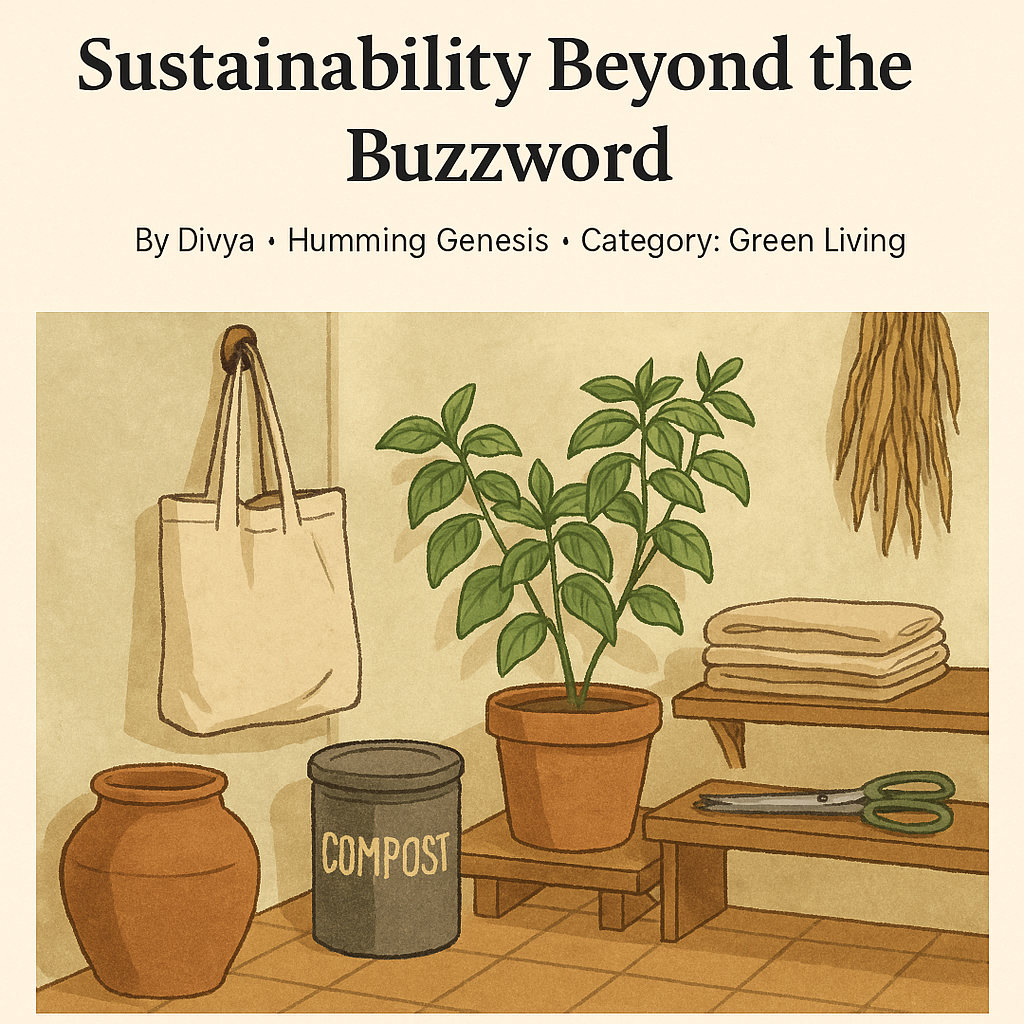
Everywhere I look today, “sustainability” is stamped like a badge—on packaging, policies, and Instagram bios. But beyond the hashtags and tote bags, I often ask myself: do we really understand what sustainability means? Or are we merely clinging to the comfort of the word while continuing with life as usual?
Growing up in Dehradun, my earliest memory of sustainability wasn’t labeled as such. It was the clay matkas in the veranda, reused mustard oil tins turned into planters, the composting pit behind my grandmother’s house. Nothing was wasted, not because it was trendy—but because it was intuitive, respectful, and practical.
It Starts at Home
Real sustainability isn’t glamorous. It doesn’t always come in bamboo packaging or cost ₹1,200. It’s in the quiet choices: washing and reusing cloth bags until they fray, mending old clothes, growing tulsi in a reused can, sharing more and buying less.
As consumers, we’ve been trained to think sustainability is something we buy—when in truth, it’s something we embody. The rise of eco-products is welcome, but without mindful consumption, we’re just creating a different kind of clutter. A metal straw used once and tossed is no better than plastic.
Local Wisdom, Global Relevance
In the Himalayan villages I’ve visited, sustainability is often practiced without English labels. Rainwater harvesting is routine. Cattle dung is fuel. Cloth diapers are still the norm. These aren’t throwbacks—they’re blueprints. If we truly want to live lighter, we must revisit what we’ve been too quick to discard in the name of “modernity.”
What if we taught schoolchildren how to compost? What if housing policies rewarded rainwater harvesting? What if we measured success by how little we consume, not how much we can afford to?
Small Acts, Big Meaning
You don’t have to be perfect to live sustainably. Start small:
- Keep a cloth napkin in your bag.
- Refuse freebies you don’t need.
- Support local artisans and farmers instead of fast delivery giants.
- Repair before replacing.
Sustainability is not a trend. It’s a quiet rebellion against excess. And it begins in the everyday choices we make.
Suggested Read: Carbon Footprint 101: What You’re Getting Wrong














No responses yet