One summer evening in Dehradun, I realized something was missing—the moths fluttering around the porch light. They used to arrive in thick, dazzling clouds when I was a child. Now, their absence felt like a silence I couldn’t explain.
Across the world, scientists are sounding the alarm on what’s being called the “Insect Apocalypse.” Insects—bees, butterflies, beetles, dragonflies, and more—are disappearing at an alarming rate. In India, the decline is visible yet underreported, and its consequences are far-reaching.
Why Are Insects So Important?
Insects might be tiny, but they are foundational to every ecosystem. They pollinate over 75% of the world’s crops, break down waste, improve soil fertility, and form the base of countless food chains. Without them, food webs collapse.
Globally, around 40% of insect species are in decline. In India, research from the Zoological Survey of India suggests sharp drops in butterfly and bee populations in biodiversity hotspots like the Western Ghats, Eastern Himalayas, and even the Doon Valley.
What’s Causing the Collapse?
Insects face multiple stressors:
- Pesticide overuse: Particularly neonicotinoids, which affect pollinator memory and navigation.
- Habitat loss: Urban sprawl, deforestation, and monoculture farming strip away wild plant diversity.
- Light pollution: Artificial lights disorient nocturnal insects and disrupt mating cycles.
- Climate change: Alters seasonal cues, forcing insects out of sync with plants and predators.
- Air and water pollution: Impact delicate aquatic larvae and airborne pollinators alike.
Last year, while surveying wildflower patches near Rajpur Road, I met two local beekeepers who had lost half their hives. “The flowers are blooming late and the rains are coming all at once,” one said. “Even the bees seem confused.”
Consequences for Humans
The loss of insects isn’t just a biodiversity crisis—it’s a food security crisis. A reduction in pollinators directly affects yields of crops like mustard, apples, tomatoes, and coffee. A 2019 study estimated that pollinator loss could reduce global food production by up to 23%.
Even ecotourism suffers. The butterflies of Assam and moth festivals in Uttarakhand are disappearing with their stars. Entire seasonal rituals are vanishing from local calendars.
How Can We Help Insects Thrive Again?
- Plant native flowers—diverse and pesticide-free—on balconies, rooftops, and in community spaces.
- Go organic or reduce chemical pesticide use at home.
- Keep the lights low—use warm-hued LEDs and switch them off when not needed.
- Support farmers and brands that practice biodiversity-friendly agriculture.
- Participate in citizen science platforms like the iNaturalist or Butterfly India.
A Buzzing Future Still Possible
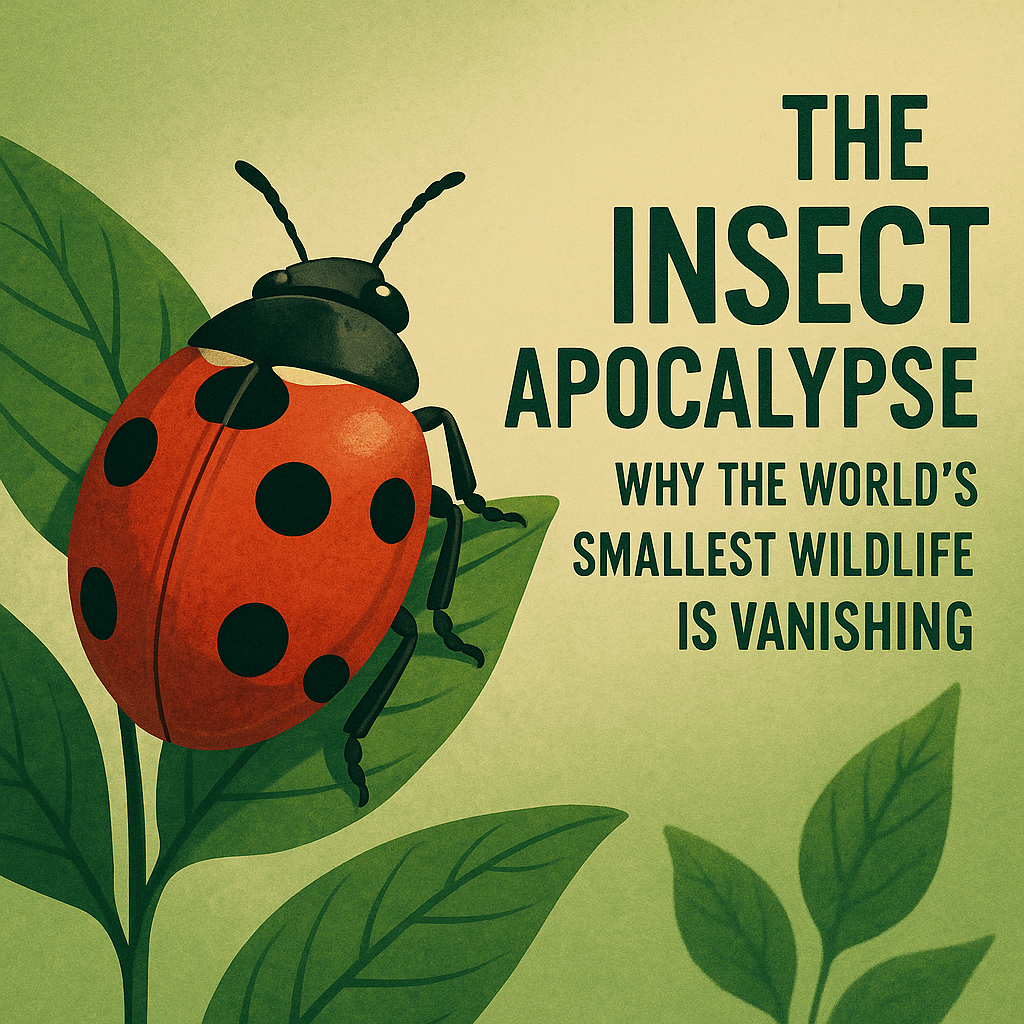
When my daughter spots a ladybug now, it’s a moment of wonder. These tiny creatures are the unsung workers of the planet—and right now, they’re waving a red flag. But if we act quickly, sensitively, and collectively, we can reverse the silence creeping into our gardens and forests.
Let’s not wait until the buzz is truly gone. Let’s listen now, before the world falls quiet.
Further Reading:
Insect Apocalypse: Explained – The Conversation
The Microplastic Menace
Rewilding Our Relationship With Nature














No responses yet