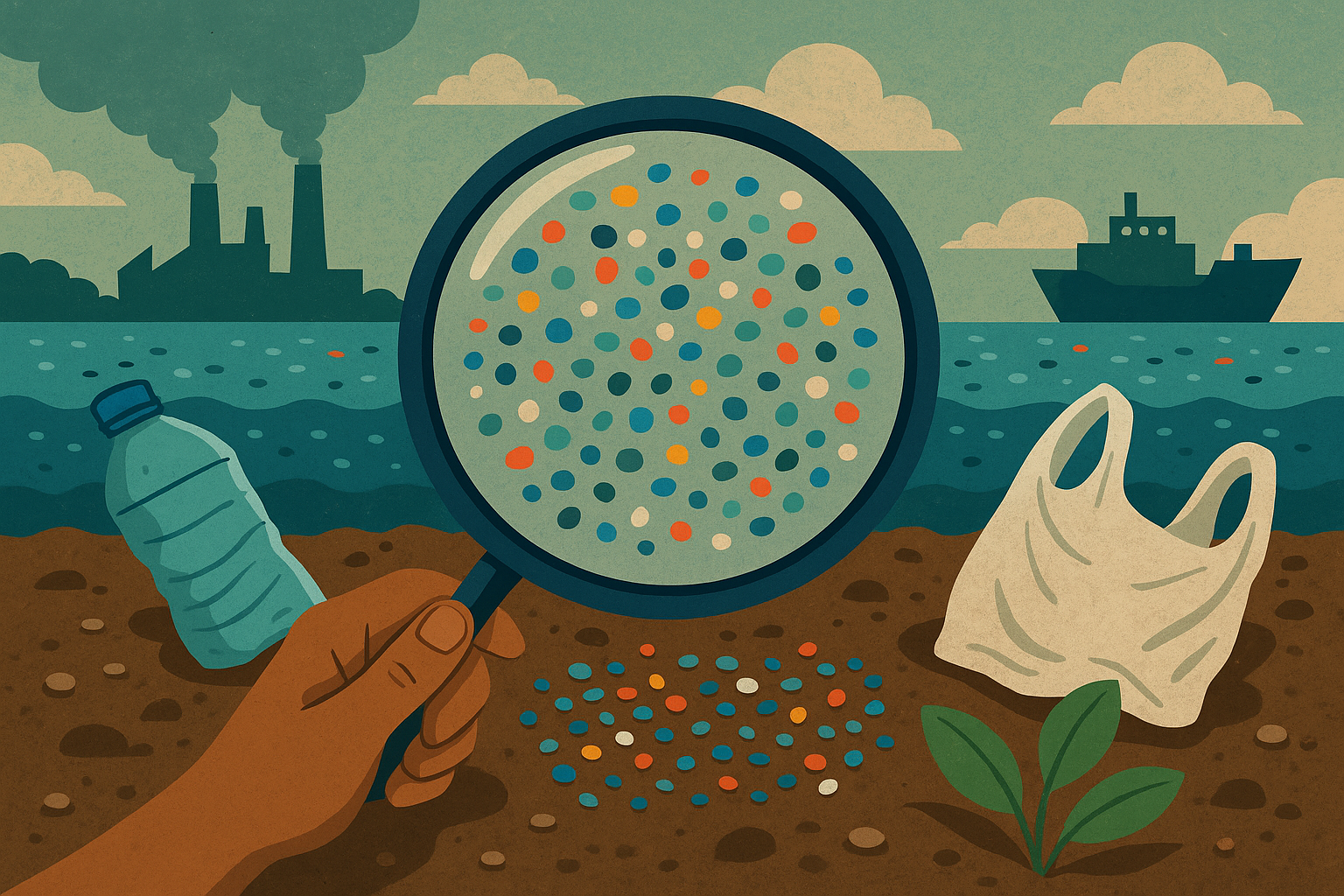
In early 2024, researchers in Chennai found microplastics in cow milk from villages miles away from the city. That discovery hit me hard—not as an environmentalist, but as a mother. If microplastics can reach our soil, our milk, our babies—how deep does this menace really go?
Microplastics, typically defined as plastic fragments smaller than 5 mm, are everywhere. From Arctic snow to the human bloodstream, they’ve infiltrated every ecosystem and organism, including us. And India is far from immune.
What Are Microplastics and Where Do They Come From?
Microplastics are of two types:
- Primary microplastics – tiny plastics manufactured intentionally, like microbeads in cosmetics or microfibers in textiles.
- Secondary microplastics – fragments that break off from larger plastic waste due to UV radiation, friction, or weathering.
Every time we wash a polyester kurti, thousands of microfibers are released into the water. Most wastewater treatment plants in India aren’t equipped to filter them out, allowing these pollutants to enter rivers, lakes, and eventually, our food.
Where Are They Showing Up in India?
Recent studies have uncovered microplastic traces in:
- Tap water – A 2022 study by the Centre for Science and Environment (CSE) found microplastics in 84% of Delhi’s municipal supply.
- Agricultural soil – Fields near Ludhiana and Hyderabad showed contamination due to plastic mulch and irrigation with untreated water.
- Seafood and salt – The Arabian Sea and Bay of Bengal are both microplastic hotspots, making marine fish and salt vulnerable.
- Human organs – In 2023, AIIMS reported microplastic particles in placental tissues. (Source: NIH/AIIMS Study)
We used to think pollution was something we could see—smog, sludge, or plastic bottles floating in rivers. But microplastics defy visibility and simplicity. They are the silent residue of our throwaway culture.
Why Should We Be Concerned?
Microplastics are not inert. They absorb toxic chemicals like phthalates, bisphenol-A (BPA), and heavy metals. When consumed by fish, cows—or humans—these toxins can interfere with hormone function, cause inflammation, and even impact fetal development.
What alarms scientists is not just presence—but persistence. Microplastics can take hundreds of years to degrade and are now cycling through air, water, and soil, forming a “plastisphere” that’s altering ecosystems at the microbial level.
What’s India Doing About It?
- In 2022, India banned single-use plastic items like straws and cutlery. But enforcement remains patchy.
- The National Green Tribunal has directed city corporations to monitor microplastics in sewage and sludge.
- Startups like Banyan Nation are working on closed-loop plastic recycling models.
- NGOs such as SankalpTaru are raising awareness through school education programs.
What Can You and I Do?
Change begins at home, in our choices:
- Switch to natural fabrics – like cotton, hemp, or bamboo. Fewer microfibers, better for skin and soil.
- Install microfiber filters in washing machines—many Indian brands now offer them.
- Reject microbeads – in face scrubs, toothpaste, or exfoliating soaps. Look for “polyethylene” or “polypropylene” in ingredient lists.
- Support bans and policies by writing to your local ward officer or MLA. Civic pressure matters.
From Soil to Soul
We once believed plastics would make life easier. And in many ways, they did. But now, we are literally consuming their cost. It’s in our salt, our blood, and our unborn children.
This crisis may be microscopic in size but it’s massive in impact. Let us not ignore the whispering warnings of microplastics. If we listen now, we can still clean up the future—gram by gram, choice by choice.
Further Reading:
The Hindu – Microplastics in India
Greenwashing in Everyday Products
Hope in the Time of Heatwaves














No responses yet