The Balcony After the Monsoon
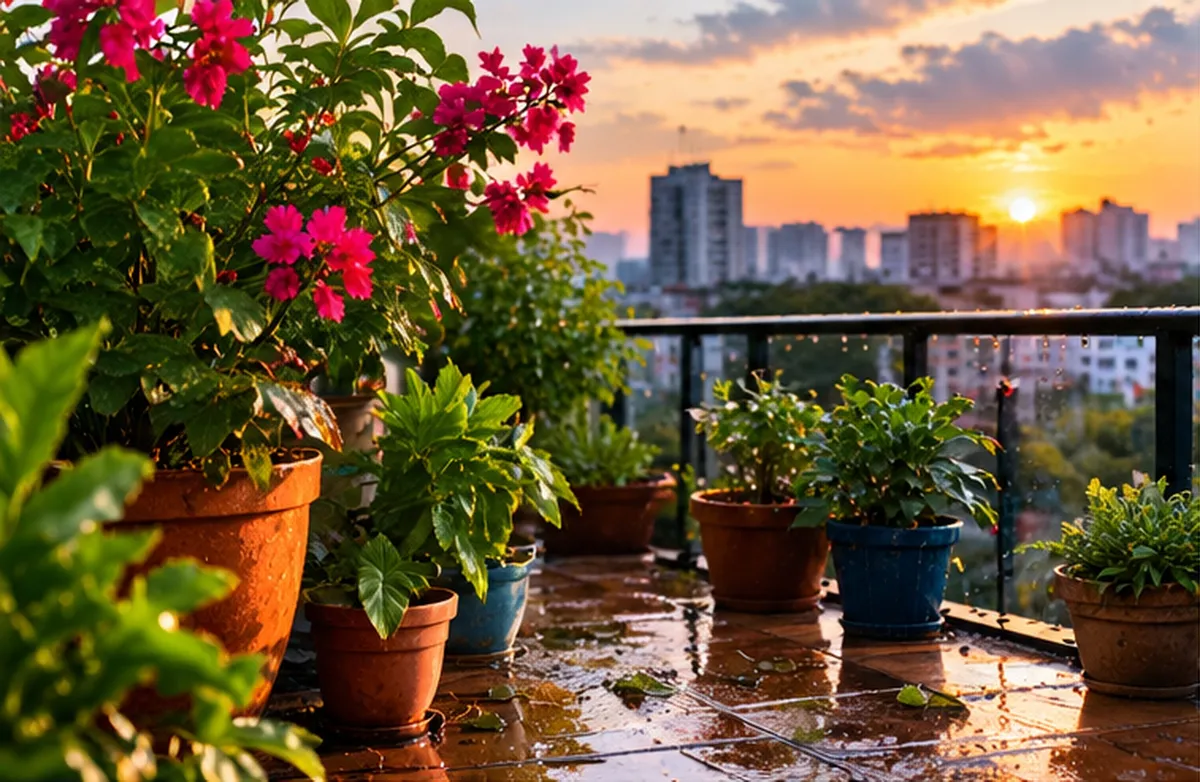
The balcony looks different at the end of every monsoon, and never quite the way I planned. Some plants that sulked all summer have doubled in size. Others that looked indestructible in April have quietly rotted at the base. Thirty-two floors up, the rain arrives sideways and the wind comes with it, so the season is less a gentle watering than a months-long stress test. Now that it is easing, it is worth taking stock.
The winners are usually the ones that like humidity and forgive wet feet: the leafy tropicals, most ferns, the tulsi that grows faster than it can be picked. The rain washes the city dust off their leaves and they respond by filling every available inch. The losers are the ones that hate sitting in water. Succulents, most herbs from drier climates, anything in a pot without proper drainage. Root rot is the monsoon's signature on a balcony, and by the time a plant looks sick above the soil, the damage below is often done.
So the first job, now, is triage. Tip out anything that smells sour or feels mushy at the stem and check the roots. Healthy roots are pale and firm; rotted ones are dark and come apart in your fingers. Sometimes a plant can be saved by cutting away the bad roots and repotting into fresh, dry mix. Sometimes it cannot, and the honest thing is to compost it and learn from it. Nearly every loss I have had traces back to the same mistake: a pot that could not drain.
The second job is the soil itself. Months of heavy rain leach nutrients out of potting mix and compact what is left. Loosening the top layer and adding compost gives the survivors something to grow into as the light gets stronger. This is also the moment to deal with the fungus gnats and snails that a wet season breeds, before they settle in.
The third job is the one I skipped for years and now never do: empty the saucers. Standing water under pots through the tail end of the rains is exactly where the city's mosquitoes breed. A garden that feeds bees and sunbirds should not also be a nursery for the insects that make the neighbours ill.
Then comes planning, which is the pleasant part. The months after the monsoon here are the kindest of the year for growing — warm, bright, not yet brutal. It is the season to start the things that fail in the heat and drown in the rain: leafy greens, a few herbs, flowering annuals that will carry colour into winter. On a balcony this high, I also re-think the wind: the pots that blew over in a storm move to the sheltered corner, and the tall plants get tied in before the next gusty afternoon.
What I value most about the end of the season is the record it leaves. Every monsoon teaches the balcony something — which corner stays wet, which pot was too small, which plant was a fair-weather friend. None of it is dramatic, but it adds up. A balcony garden is not really a collection of plants. It is a slow accumulation of knowledge about one small, windy, sunlit place, gathered a season at a time.