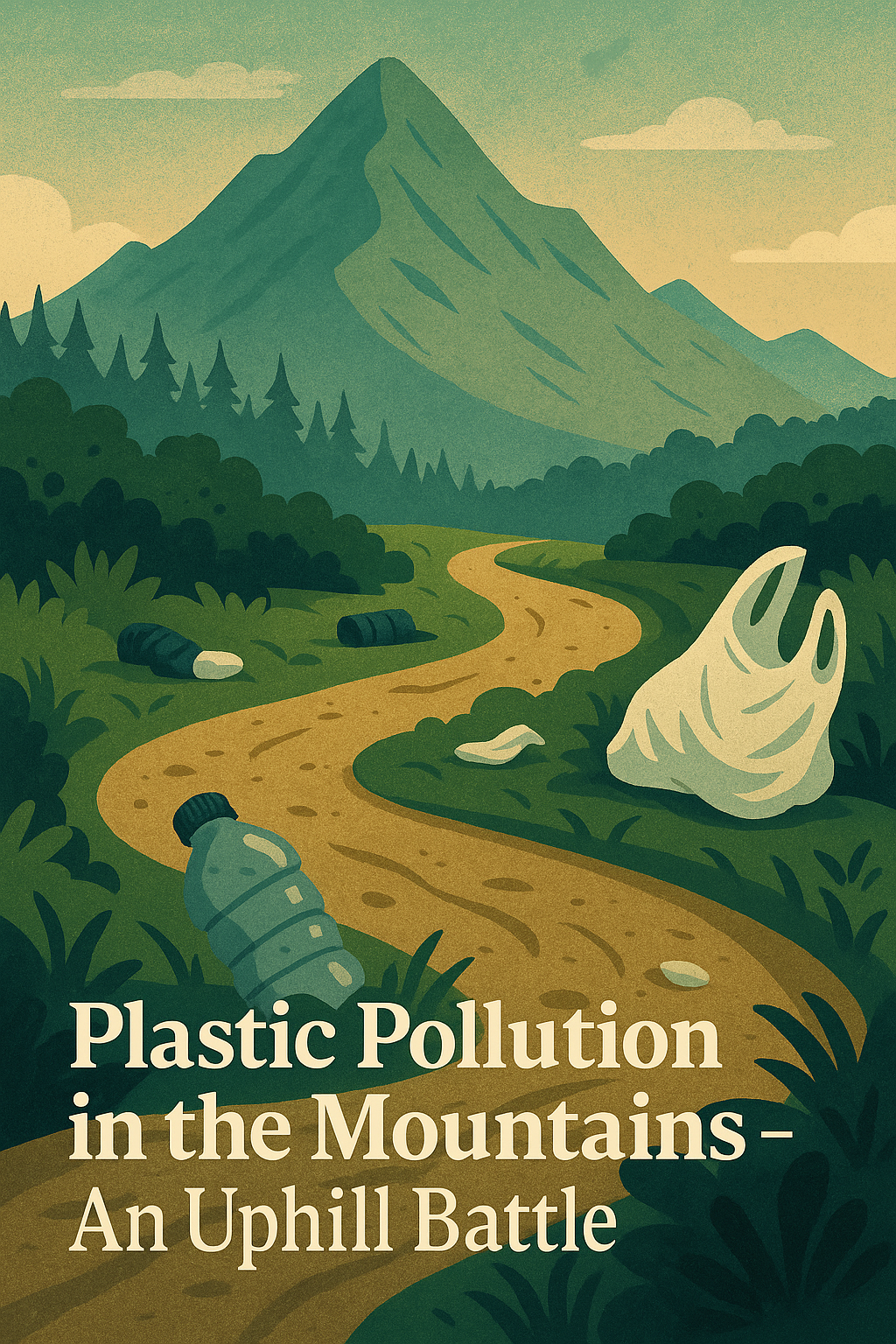
There’s a strange sight I often encounter while trekking through the hills of Uttarakhand. Amid towering deodars and ancient moss-covered rocks lies a familiar intruder—a packet of chips, a disposable bottle, a worn-out slipper. Plastic, oddly immune to time, rests where even the leopards tread lightly.
Plastic pollution in the Himalayas is not just an eyesore—it’s a symptom of deeper neglect. The very landscapes that provide oxygen, water, and spiritual solace are choking under the weight of convenience and consumerism.
How Did It Get Here?
The surge in plastic waste in mountain regions is closely tied to unregulated tourism, lack of infrastructure, and poor awareness. Trekkers carry packaged food, vendors sell water in plastic bottles, and local businesses often lack access to biodegradable alternatives.
During the Kedarnath pilgrimage season, an estimated 70–100 tons of solid waste is generated weekly. Much of it—multi-layered packaging, PET bottles, snack wrappers—ends up in streams, gorges, or is burned, releasing toxic fumes into pristine air.
Why the Mountains Suffer More
Unlike cities, hill towns lack robust waste collection and disposal systems. In places like Mussoorie or Binsar, garbage trucks can’t access remote settlements. Open dumping becomes the norm. Monsoon rains then wash this plastic downstream—eventually choking rivers that serve the plains.
Wildlife too is affected. Monkeys and langurs scavenge from dumps and ingest plastic. Birds use plastic fibers in nests. Invertebrates disappear from soil clogged with microplastics. Entire ecosystems shift without us realizing.
Local Heroes Fighting Back
But hope shines in pockets. In villages around Almora, women’s self-help groups have started collecting plastic wrappers in cloth bags and returning them to towns for recycling. In Rishikesh, youth-run clean-up drives along the Ganga are now a weekly ritual. And in Sarmoli, near Munsyari, tourists are encouraged to carry back their waste—a powerful reversal of the usual “leave no trace” ethic.
Even simple solutions help: community composting pits, steel water refill stations on popular trails, training locals to create eco-bricks from waste plastic. These actions are small, but they’re seeds.
What Can You Do as a Visitor?
- Carry a reusable water bottle and cloth bags.
- Avoid buying packaged food during treks—go local instead.
- Say no to freebies and sample packs handed out at shops and temples.
- If you pack it in, pack it out. Always.
As visitors to the mountains, our responsibility is double: to admire and to preserve. Every piece of plastic we leave behind is a scar on a sacred landscape.
A Shared Climb
Fighting plastic pollution in the Himalayas is truly an uphill battle—but it’s not impossible. With conscious travelers, empowered locals, and better policies, we can unburden these hills. The air here still holds stories of wildness. Let’s ensure our waste isn’t one of them.
Suggested Read: Sustainability Beyond the Buzzword














No responses yet