The Cat Who Cannot Walk
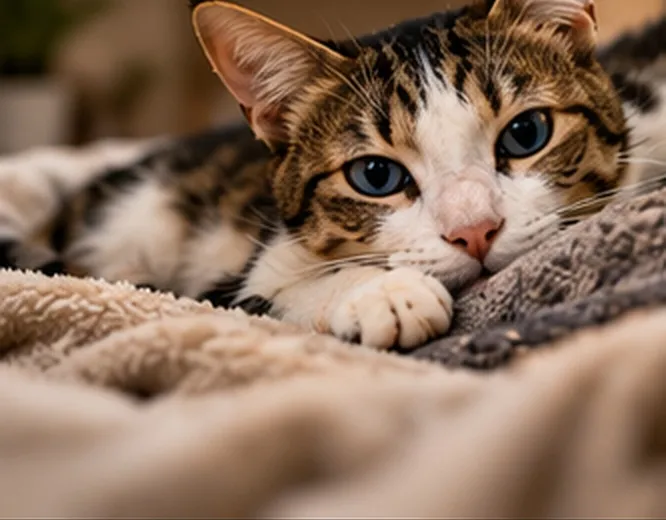
One of the cats in this house does not use her hind legs. She has not for most of her life. She gets around by pulling herself along on her front legs with a determination that visitors find upsetting for roughly four minutes, after which she has usually climbed onto something she was not supposed to be on and the sympathy converts into alarm.
I want to write about this practically, because when it first happened I looked for practical writing and found mostly sentiment.
The real work is bladder and bowel management. An animal with that kind of spinal injury often cannot empty its bladder on its own, and a bladder that is not emptied properly leads to infection, and repeated infection leads to kidney damage, which is what actually shortens these lives — not the paralysis. So you learn to express a bladder, several times a day, every day, and you learn what normal feels like so that you notice the day it is not. That is the whole job, more or less. It is not heroic. It is a routine, like brushing teeth, that cannot be skipped.
After that it is surfaces and skin. Dragging a body across a floor creates pressure and friction injuries on exactly the areas that cannot feel them, so you check the skin constantly and you make the floor forgiving — mats, rugs, no long stretches of rough tile. You keep the fur around the back end short, because hygiene is the difference between a manageable life and a miserable one. You keep her weight down, because everything above is harder with extra load on the front legs.
Then there is equipment, which people ask about most and which matters least. Wheeled carts work well for some animals and not for others. Ours tolerated one and preferred her own method. The correct answer is whatever the animal actually chooses, not whatever photographs best.
The question underneath all of this is the one people ask obliquely: is it fair. Is it kind to keep an animal alive in that condition. I have thought about it a great deal and my answer is that the question is usually being asked about the wrong thing. It is asked as though the disability itself were the suffering. It is not. Pain is suffering. Chronic infection is suffering. Being unable to reach water, or being isolated, or being filthy is suffering. None of those is an inevitable consequence of not being able to walk; each is a consequence of care that is absent or inadequate.
So the honest version of the question is not whether her life is worth living. It is whether I am willing to do the work that makes it worth living, indefinitely, on days when I am tired. That is a real question with a real cost, and anyone taking on an animal like this should answer it soberly rather than sentimentally, because the failure mode — adopting on a wave of feeling and defaulting on the routine six months later — is worse than not adopting.
What she has taught me, and I am wary of making an animal into a lesson, is how quickly a body reorganises itself around what it has rather than mourning what it does not. She has no concept of being a cat who cannot walk. She is simply a cat, who gets where she is going, and who is currently on top of the fridge, which remains unexplained.