What the Glacier Remembers
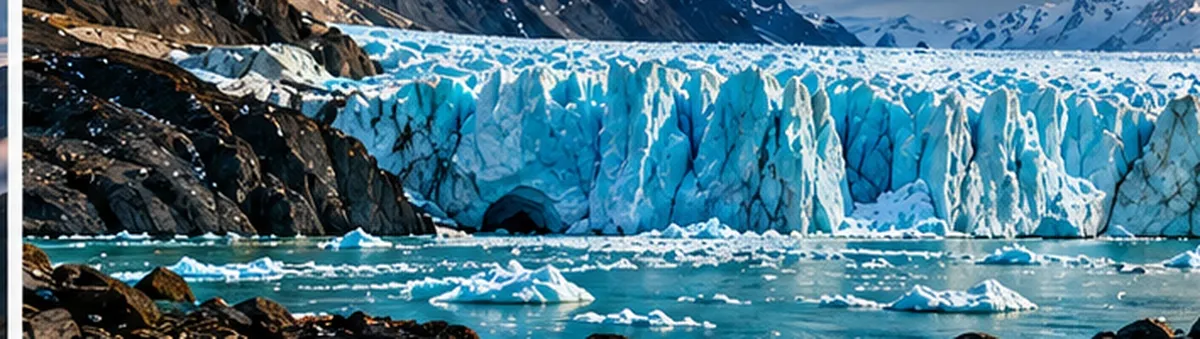
A glacier is not a static block of ice. It is a slow river with a budget — snow accumulating at the top, ice melting at the bottom — and its length is the running balance of that account. When it retreats, it is not because ice has been removed. It is because the account has been in deficit for long enough to show.
That budget is also an archive. Ice traps air as it forms, and that trapped air is a physical sample of the atmosphere from the year it fell. Drill down and you recover a sequence of past atmospheres, which is how we know with confidence what the composition of the air was long before anyone was measuring it. Layers also record volcanic ash, dust, and the isotope ratios that indicate temperature. The ice is a document, and it is being read carefully at the same time as it is being lost.
For the subcontinent, the part that matters most immediately is not the archive but the buffer. Himalayan glaciers and seasonal snow hold water through the dry months and release it slowly, which is what keeps the big rivers running between monsoons. That buffering matters far less in a year of good rain than in a bad one — and it matters most precisely in the years when everything else has failed. It is insurance, in solid form.
Retreating glaciers produce a deceptive sequence. For a period, melt increases and rivers can run higher, which reads as abundance. Then the ice that was producing the extra water is gone, and the flow drops below what it used to be, permanently. The good years are not a reprieve. They are the reserve being spent.
There is a more immediate hazard too. Meltwater pools behind unstable dams of loose rock and ice, forming lakes that did not previously exist. When one of those dams fails, the release is sudden and catastrophic for everything downstream of it. The number of such lakes has been increasing, and mapping and monitoring them is unglamorous, essential work that is chronically underfunded relative to the number of people living in the path.
What I find genuinely difficult about glacier loss is the timescale mismatch. The ice responds to decades of accumulated warming, with a lag; the effects arrive on the schedule of a river basin's agricultural year, which is now. A person farming in a valley fed by that melt is experiencing the consequence of a physical process set in motion long before the current argument about who should cut emissions began, and they had approximately no part in setting it in motion.
None of this makes adaptation pointless — the opposite. Storing monsoon water where the glacier used to do it for free, restoring the springs and wetlands that hold water in the hills, improving how efficiently irrigation uses what arrives, mapping the hazardous lakes and giving the villages below them a warning system: these are concrete, fundable and mostly not being done at the necessary pace.
The archive will be read. Cores are already drilled, and the record of the last few thousand years of atmosphere is safely in freezers. It is the reservoir we cannot copy. You can keep a sample of the ice. You cannot keep a sample of what it was doing for the rivers.