The Saucer Under the Plant Pot
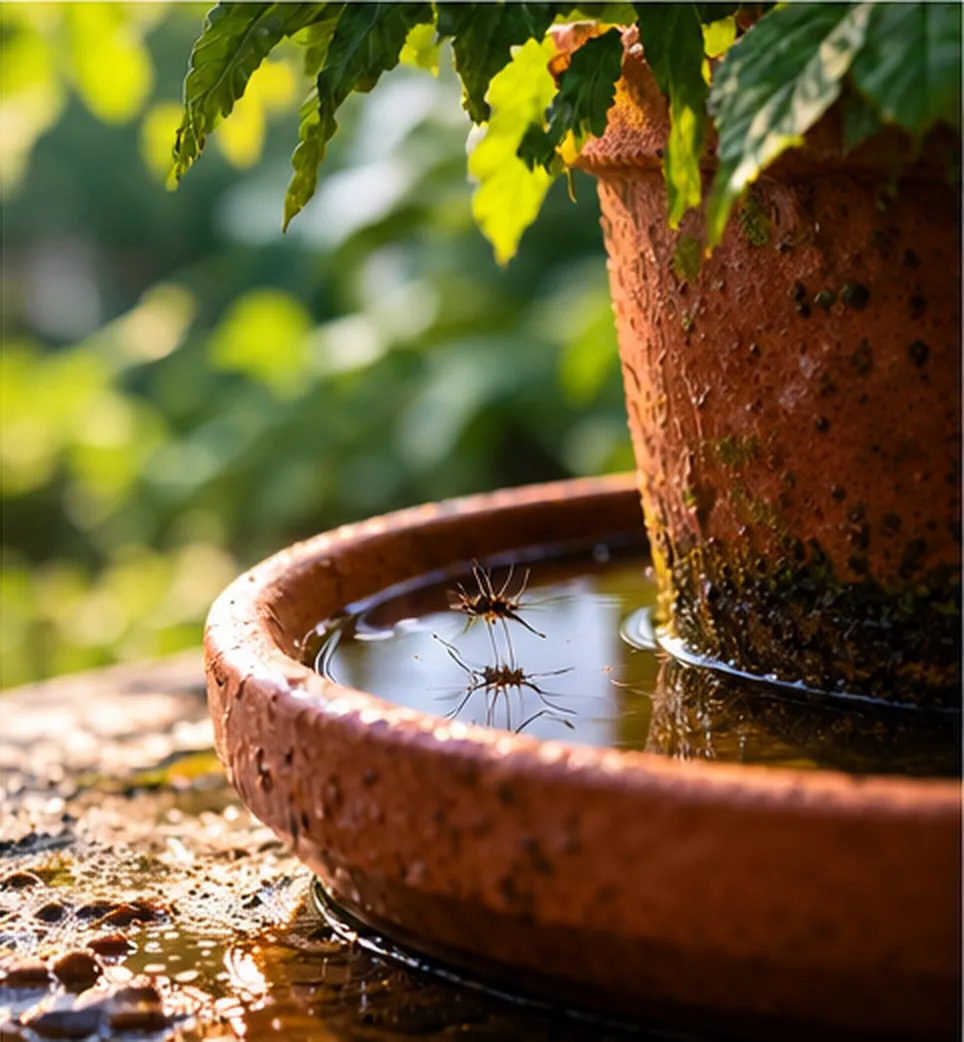
Every year, as the rains taper off, the same conversation starts in residents' groups across the city: someone has dengue, then someone else, then a neighbour's child. It is usually discussed as bad luck, or as the municipality's failure. It is partly both. But a large share of it starts much closer than that — in a saucer, a bucket, a flower vase, a discarded coconut shell on a terrace nobody visits.
The mosquito that carries dengue, Aedes aegypti, is not the swampy, dusk-biting insect most of us imagine. It is a city specialist. It prefers clean, still water in small containers, it bites mostly during the day, and it rarely travels far from where it hatched. That last fact is the important one. The mosquito biting you on your balcony was very probably raised within a short walk of it — often in your building, sometimes in your own flat.
It also has a patient trick. Its eggs are laid just above the waterline, on the inside wall of a container, and they can survive drying out for a long time. When water returns, they hatch. So emptying a container is not quite enough; the eggs stuck to its sides wait for the next fill. Scrubbing the inside, or turning the container over so it cannot hold water at all, is what actually breaks the cycle.
Which brings me, uncomfortably, to plant people. A balcony garden is close to an ideal nursery: saucers under every pot, watering cans left half full, trays that collect runoff, a decorative bowl of water for the birds. I am as guilty of this as anyone. The fix is dull and weekly. Empty and wipe the saucers, or fill them with sand so water drains through rather than sitting. Keep watering cans upside down. Change the birds' water every couple of days and scrub the bowl. Check the places you never look: the tray under the fridge, the flat bit of a roof, the tarp over something stored outside.
The part that makes this a genuinely civic problem is that it only works collectively. One tidy flat in a building full of neglected terraces changes little, because the mosquitoes do not stay on their own floor. The buildings that manage it best tend to be the ones where somebody organises a weekly check of common areas — the overhead tank lids, the drains, the construction debris on the ground floor — and where residents nudge each other without it becoming a feud.
And when someone does get sick, the most useful thing is not panic but early attention. High fever with severe body ache, pain behind the eyes, a rash — these are reasons to see a doctor promptly rather than waiting it out. Doctors generally advise against self-medicating with certain common painkillers during suspected dengue, because some of them raise the risk of bleeding; this is exactly why it is worth asking a professional rather than reaching for whatever is in the cabinet. The dangerous phase often comes as the fever drops, when people assume they are recovering.
I find something clarifying in how small the intervention is. Most of the environmental problems I write about are too large for any one household. This one is not. It is a saucer, turned over, every week, by enough people. The season is decided less by the weather than by what we leave lying about for it to fill.