The Words We Use for Bodies That Work Differently
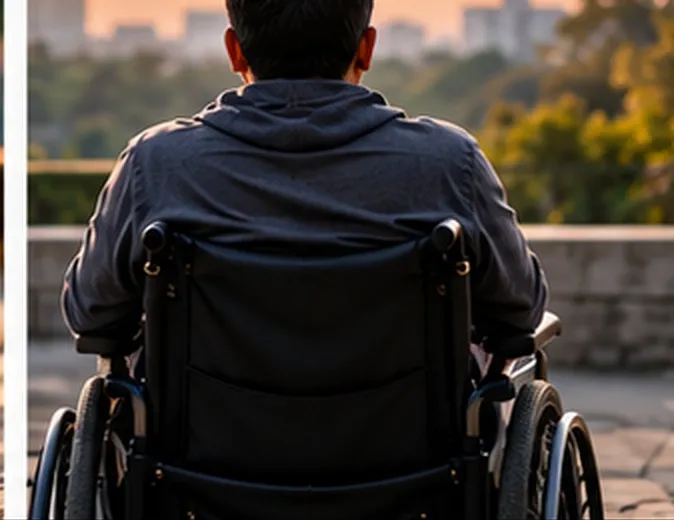
I used to think arguments about terminology were a distraction from material questions — that whether you said one word or another mattered far less than whether a building had a ramp. I still think the ramp matters more. I no longer think the words are unrelated to whether the ramp gets built.
The vocabulary we have inherited for disability is mostly built from two ideas. The first is deficit: language that frames a person primarily by an absence, by what is missing relative to an assumed default. The second is inspiration: language that frames the same person as remarkable for doing ordinary things, which sounds warm and is quietly a statement that you expected less.
Both do the same underlying work. They locate the difficulty inside the person. And where the difficulty is located determines what gets fixed. If a wheelchair user cannot enter a building, the deficit framing says the problem is that they cannot walk. The alternative framing says the problem is that the building has steps and no ramp. Only one of those is a problem anyone can solve this financial year.
That is the substance of what people mean by the social model of disability, and it is not wordplay. It is a claim about causation. An impairment is a fact about a body. A disability, in this framing, is what happens when an environment is built as though that body does not exist. The stairs are not neutral. Somebody chose them.
This is also why the euphemism treadmill fails. Inventing a gentler phrase for the same underlying attitude buys a few years before the new phrase acquires the old connotation, because the connotation was never in the word. The most useful correction I received on this was blunt: stop looking for the polite term and start asking what the term is doing.
On specifics, I will say only what I am reasonably confident of. Ask people what they use for themselves, and use that; communities differ, and some strongly prefer identity-first language while others prefer person-first, and both preferences are held by thoughtful people. Avoid describing someone as suffering from a condition unless they have said they suffer. Avoid the vocabulary of confinement for wheelchairs — for most users the chair is the opposite of confinement, it is the thing that restores range. And be careful with 'special', which in practice often signals separate rather than included.
I write about this partly because of an animal. One of the cats here has hind legs that do not work, and I have watched how people talk about her, and it is a startlingly clean demonstration of the pattern. She is described as brave, which she is not; she is a cat. She is described as suffering, which she mostly is not, because the care she needs is being given. What she is, is a cat in a flat that has been slightly rearranged — softer floors, lower steps, water where she can reach it. The rearranging is the whole story, and nobody ever calls the rearranging inspirational, because it is furniture.
The point is not to police anyone's vocabulary. It is that the way we habitually describe a situation quietly proposes where the solution lies. Describe it as a person's deficiency and the response is sympathy. Describe it as a design decision and the response is a ramp.