Who Picks Up After Us
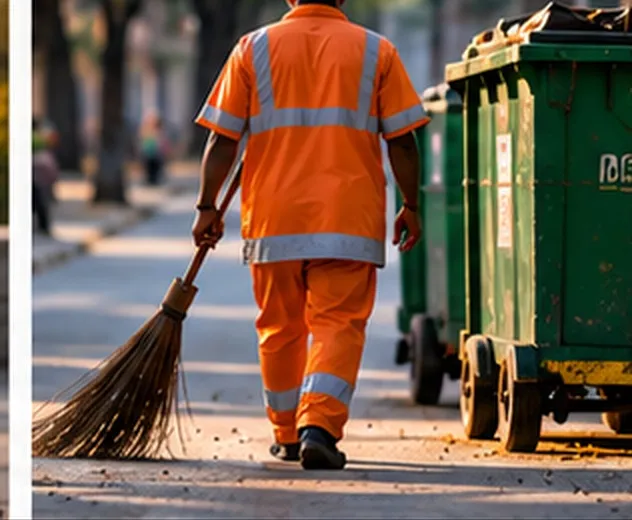
Most writing about waste, including some of mine, stops at the material. How much plastic, which polymer, what fraction recycled, where the landfill is. It is a clean way to discuss a subject that is not clean, and it has a convenient blank space in the middle of it where the workers are.
Every kilogram of what a city discards is handled by a person. Usually several. Someone collects it from the door, someone sorts it — often by hand, often without adequate gloves, frequently including sanitary waste, broken glass, syringes and chemical residues thrown in unsegregated — someone transports it, someone works the site where it ends up. Sanitation work in this country is also not randomly distributed across the population. It falls overwhelmingly on particular communities, along caste lines, in a pattern that is centuries old and has survived every formal prohibition aimed at it.
Manual scavenging — the cleaning of sewers and septic tanks by hand — has been prohibited by law, and people continue to die doing it. They die of asphyxiation and toxic gas, in confined spaces, usually without protective equipment, frequently employed through contractors in a way that makes accountability conveniently diffuse. These deaths are reported individually and absorbed individually, and the aggregate rarely becomes a subject in the way a single industrial accident elsewhere would.
I do not think most people are indifferent to this. I think it is genuinely invisible, in the specific sense that the work is timed and routed so that it happens where and when we are not. The bin is emptied before we are awake. The sewer is entered at night. Invisibility is not incidental to the arrangement; it is what allows the arrangement to persist.
The connection to the environmental argument is direct, and it cuts against a comfortable habit. Segregation at source is usually framed as a recycling measure, and it is. But the first and most immediate beneficiary of separating wet from dry, and of wrapping glass and sanitary waste before it goes out, is the person whose hands reach into that bag a few hours later. That reframing changes it from an abstract civic duty into a specific obligation to a specific person, and in my experience it is the version that actually changes what households do.
Waste pickers in the informal sector recover an enormous proportion of what actually gets recycled in Indian cities, and they do it while being treated as an encroachment rather than as infrastructure. Where cities have formally recognised them — identity cards, integration into municipal collection, access to sorting facilities and protective equipment, a fixed rate rather than scavenged margins — recovery rates have gone up and conditions have improved simultaneously. It is not a trade-off between efficiency and dignity. The efficient system is the one that does not depend on somebody being desperate.
What would I ask for, concretely. Mechanisation of sewer cleaning, enforced, with the equipment actually procured rather than announced. Direct employment instead of contractor chains designed to diffuse liability. Protective equipment, health screening and compensation that is not contingent on a family's ability to sustain a legal fight. Recognition of waste pickers. And segregation at source, done properly, by us.
The measure of a waste system is not the percentage recycled. It is whether anyone has to put their hands into it, and who that person is.